Enrollment open
Online course for surgeons & assisting surgeons
Study robotic systems and coordinated surgical workflows, with academic support and a clear pathway to separately arranged practical phases.
- One course for surgeons and assisting surgeons
- Online · course language: English
- USD 995 · one-time · online component only
- 12 months from enrollment to complete the online component
Practical phases or activities are scheduled separately under their own agreements and costs.
Checkout and the enrollment agreement are currently in English.
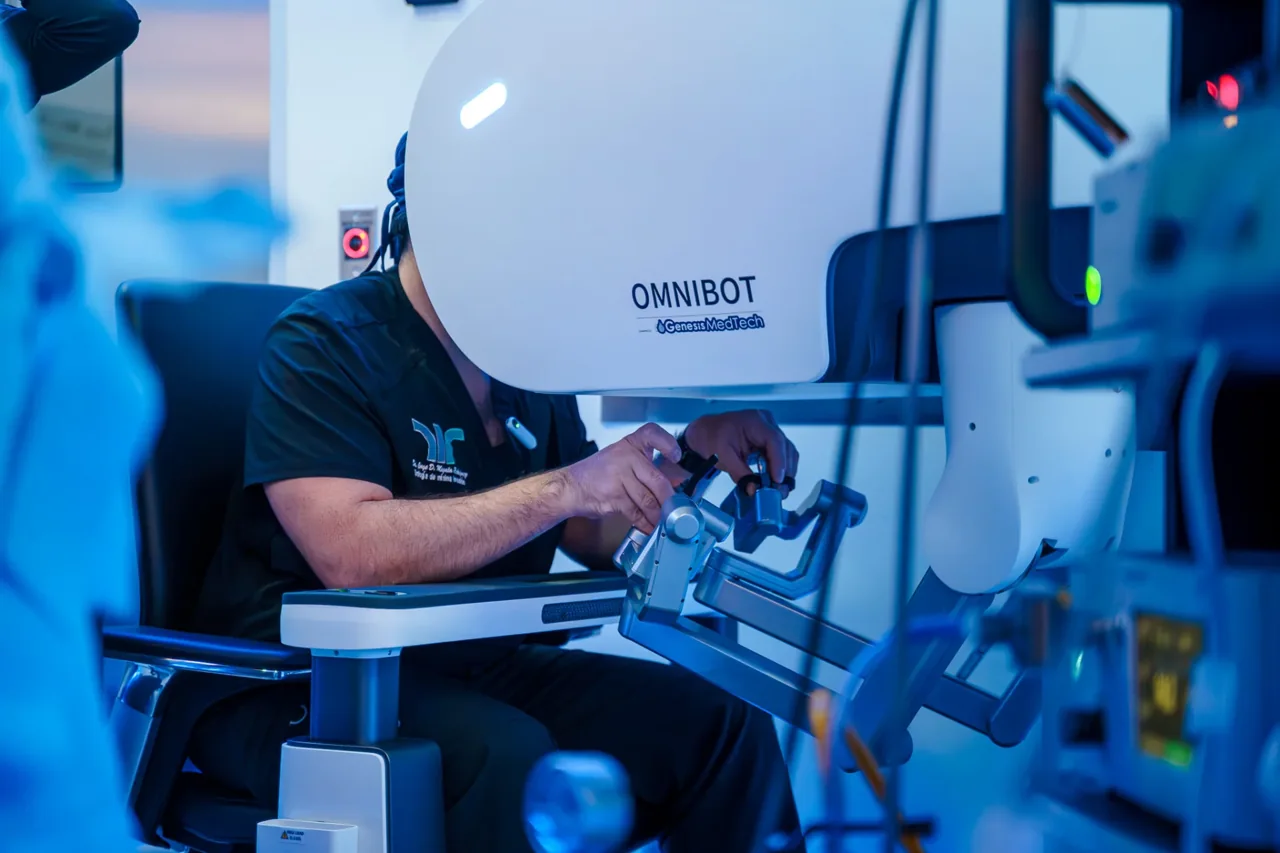
Quick facts
- USD 995 · one-time payment
- Online component only
- Course currently delivered in English
- Practical training is arranged separately
A shared foundation. Two distinct practical roles.
Build a structured understanding of robotic surgery systems, operating-room preparation and coordinated team workflows. Surgeons and assisting surgeons study the same online course; their practical duties, supervision and institutional authorization remain role-specific.
Who this is for
Principal surgeons and assisting surgeons enrolled in one shared online course; practical duties remain role-specific.
This curriculum describes the program scope, not a list of lessons all available now. Published content, assigned learning and progression are shown inside your classroom. Draft content is not promised as available.
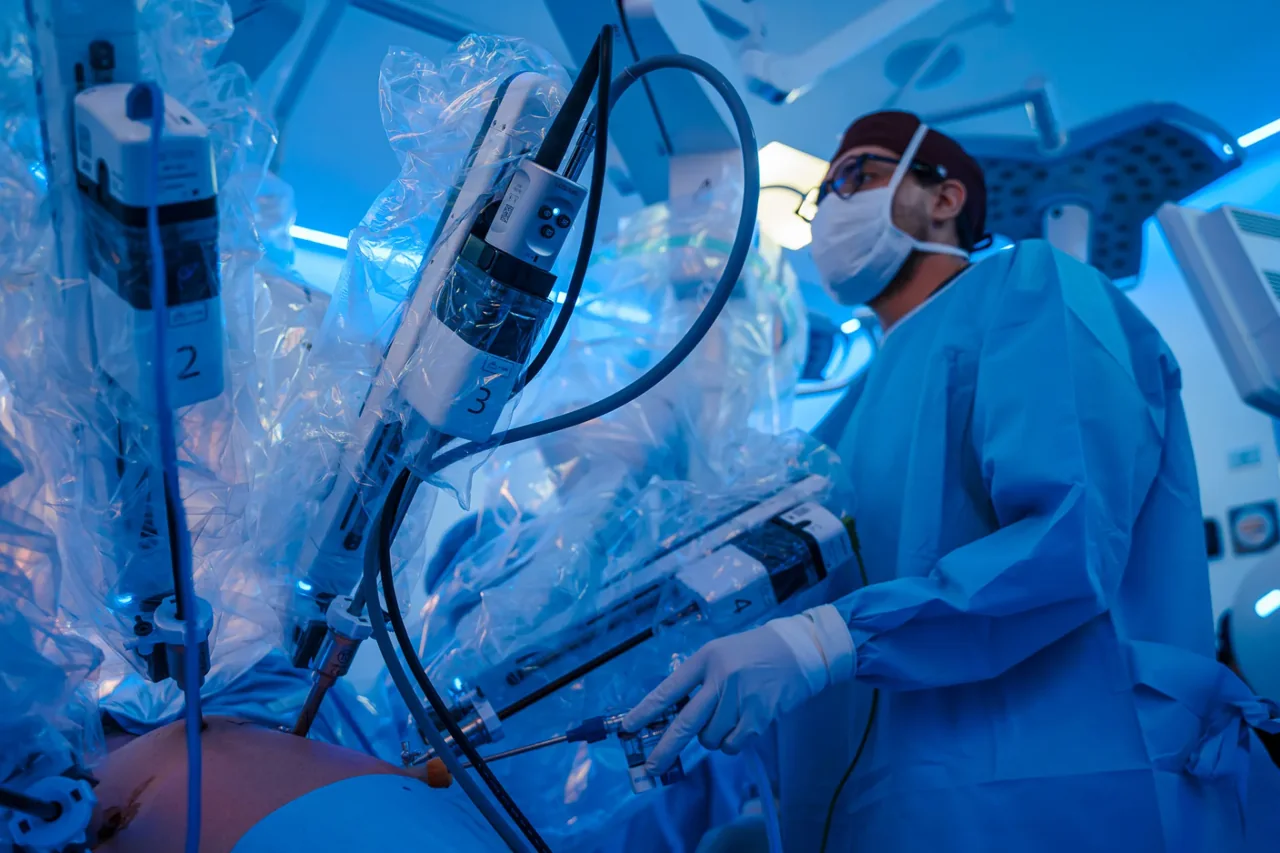
Educational benefits
- 01
Structured knowledge
Study robotics, system components and coordinated workflows in one shared course.
- 02
Academic support
Academic mentorship, progress review and administrative coordination under the agreement.
- 03
Clear progression
Understand the prerequisites and separate arrangements for practical stages.
Learning objectives
A knowledge-based overview of the course scope. Practical competence requires separately arranged supervised training and assessment.
- 01
Understand robotic motion
Explain robotics fundamentals, kinematics and the remote center of motion (RCM) in the context of surgical systems.
- 02
Recognize the system
Identify robotic platforms and MP1000 components, including the console, patient cart and vision system.
- 03
Describe preparation
Outline patient preparation, port-placement considerations, docking and sterile draping workflows.
- 04
Coordinate your role
Describe console ergonomics and controls, and distinguish surgeon and assisting-surgeon responsibilities within the team.
Introduction video
Program overview — not a free first module. This existing Academy video presents the wider training structure; practical stages remain separately arranged.
Official training & certification structure
Surgeon course currently delivered in English. Website available in English and Spanish.
Open the video on VimeoExperience three actual course lessons, separate from this program overview. Video audio is in English.
Program topics, in detail
A knowledge-based overview of the course scope. Practical competence requires separately arranged supervised training and assessment.
Some lessons are still in production; current status is listed under Content availability below.
This is a thematic overview of the knowledge areas. Module titles, workload and platform applicability for your enrollment are shown in the current curriculum inside the classroom.
Primary course topics
01Robotics fundamentals, kinematics & RCM
Principles of robotic movement, kinematic relationships and remote center of motion; terminology for understanding the system and its movement constraints.
02Robotic platforms & MP1000 components
Platform orientation and MP1000 system components: the surgeon console, patient cart, vision system and their roles in an integrated workflow.
03Console ergonomics & controls
Console positioning, ergonomics and control functions; understanding the operator interface before separately supervised practice.
04Patient cart & docking
Patient-cart preparation and positioning, docking workflow and coordination between the console operator and bedside team.
05Vision & visualization
Orientation to the vision system and visualization workflow, with attention to coordinated system preparation.
06Patient preparation & port placement
Patient preparation and port-placement considerations within the robotic workflow; clinical planning and execution remain subject to supervised practice and institutional approval.
07Sterile draping & team workflow
Sterile draping, system preparation and communication across surgeon, assisting-surgeon and operating-room team roles.
Understand the platform, the workflow and your role
Explore the knowledge areas that support preparation for robotic surgery training:
01Foundations and orientation
Robotic surgery principles, platform architectures and an introduction to the training pathway.
02System and team preparation
The console, patient cart, visualization, instrumentation and coordinated operating-room workflows.
03Safety and platform-specific practice
Safety concepts, troubleshooting, instrument handling and role-specific preparation, using the approved curriculum for the applicable platform.
04Knowledge assessment and next steps
Assigned assessments, feedback and academic review before a request for the next stage.
Content availability
Five complete modules and two quizzes are activated; 21 written lessons and three additional videos are published. Twenty-four pending entries include cover-only placeholders. Safety Foundations and its quiz remain draft pending faculty review of kinematics and ergonomics content.
Free samples
Three free lessons from the course for surgeons and assisting surgeons.
1:01 · Video audio: English
Introduction to Robotic Surgery
Learn the principles of robotic surgery and the surgeon’s role in controlling the system.
3:17 · Video audio: English
Origins of Surgical Robotics and Early Telemanipulators
Explore the evolution of early systems and the principles of telemanipulation.
3:38 · Video audio: English
Kinematics101: DOF, Joints and Motion Scaling
Understand degrees of freedom, joints and motion scaling.
Loading this lesson connects to Wistia. Playback starts only when you press play in the player.
Surgeon training pathway
The integrated program design connects foundational education with observed practice and continuing feedback. Each stage has its own evidence and review requirements.
Online component
I · Online foundations
12 months from enrollment to complete the online component; practical phases or activities follow their own scheduling and agreements.
Classroom access does not automatically expire; keeping access does not extend the academic term.
Separately arranged
II
Simulator & dry lab
III-A
Bedside training
III-B
Console training
III-A and III-B are role-specific tracks; not every assisting surgeon progresses to the console.
IV
Hospital progression
- 01
Review the agreement & enroll
Follow the existing Kajabi checkout to read the full enrollment, liability and NDA agreement, accept electronically using its checkbox, and complete secure payment on that same page.
- 02
Study your assigned content
Enter the English-language classroom, follow published content and assigned progression, and complete the required knowledge assessments.
- 03
Review progress with academic support
Use the academic mentorship, progress review and administrative coordination provided under your enrollment agreement.
- 04
Confirm practical arrangements
Discuss role-specific prerequisites, availability, scheduling, separate fees and institutional authorization before planning practical or hospital participation.
Learning continues beyond the online classroom
No fixed seat hours or week-by-week timetable is promised; progression depends on requirements, review and confirmed arrangements.
- I
Online foundations
Assigned online study, knowledge assessments and academic review.
Study the assigned curriculum and complete its knowledge assessments. Academic review establishes whether the requirements for your curriculum version have been met.
- II
Simulator & dry lab
Separately scheduled and charged practical exercises and assessment.
Develop practical skills through assigned exercises, documented participation and instructor assessment. Attendance alone does not establish completion.
- III-A
Bedside training
Role-specific, supervised bedside participation under institutional authorization.
Bedside and console participation are documented separately. Your actual role, permitted tasks and supervision depend on your preparation and the responsible institution’s authorization.
- III-B
Console training
Supervised console participation only within the enrolled professional’s permitted role and approved scope.
- IV
Hospital progression
Hospital-based mentored progression with confirmed availability, review and institutional approval.
The integrated program design continues in the receiving hospital through individually assessed encounters, structured feedback and a documented next-step recommendation.
Practical stages and Phase IV require confirmed arrangements. Completing a course, reaching a score or recording a fixed number of encounters does not grant independent operating privileges.
What tuition covers — and what needs a separate plan
Included under the enrollment agreement
- The assigned online course and knowledge assessments
- Academic mentorship and progress review
- Administrative coordination under the enrollment agreement
Scheduled and charged separately
- Simulator and dry-lab training
- Bedside and console practical training
- Hospital-based clinical phases and their arrangements
Practical phases depend on availability, eligibility, separately confirmed scheduling and fees, and institutional approval. Online enrollment does not guarantee placement. Academic support is distinct from a confirmed clinical placement or permission to operate.
Start with knowledge. Plan the next stages separately.
Online learning provides the knowledge foundation for the wider OMNIBOT training pathway. Review the course content and enrollment terms before purchasing, and discuss practical-training availability before making travel or clinical plans.
- Online education
- The course and knowledge assessments specified in your enrollment.
- Practical training
- Simulation and dry-lab activities arranged under their own prerequisites, assessment requirements, availability and fees.
- Clinical progression
- Supervised participation and mentorship subject to individual eligibility, institutional authorization and an agreed scope.
- Hospital authority
- Privileges and approval for each clinical case remain separate from course completion.
Duration & access
No fixed seat hours or week-by-week timetable is promised; progression depends on requirements, review and confirmed arrangements.
Term and access
- 12 months from enrollment to complete the online component; practical phases or activities follow their own scheduling and agreements.
- Classroom access does not automatically expire; keeping access does not extend the academic term.
- Extensions require a written request and approval under the agreement.
Cost & enrollment terms
- Tuition
- USD 995, paid once, for the online course. This is not payment for the full in-person pathway.
- Language
- The surgeon course is currently delivered in English. The website is available in English and Spanish; translated lessons or subtitles are not promised.
- Clinical boundaries
- Academic education does not grant clinical privileges or independent practice. Practical phases are separate and placement is not guaranteed.
- Refunds & deferrals
- Refunds and deferrals are subject to the enrollment agreement. The English agreement governs.
Kajabi presents the full enrollment, liability and NDA agreement, an electronic acceptance checkbox and secure payment on the same checkout page. Review the English agreement before accepting; this website does not collect a signature or payment.
See the operating room in context
Explore an OMNIBOT Academy 360° educational recording to see how the team, equipment and operating-room environment relate to one another.
Educational footage supports learning; viewing it does not establish practical competence. This preview is distinct from the existing Surgeon 360° portal, whose integration is still in preparation.
Before you enroll
01Is this a different course for assisting surgeons?
No. Surgeons and assisting surgeons share one online course. Practical responsibilities, supervision and authorization are role-specific and arranged separately.
02Does USD 995 include practical training?
It covers the online course, with academic mentorship, progress review and administrative coordination under the enrollment agreement. Simulator/dry lab, bedside, console and hospital phases are separately scheduled and charged, subject to availability and institutional approval.
03Does classroom access end after 12 months?
No automatic classroom expiry is imposed at 12 months. The online-component completion deadline is still 12 months from enrollment; practical phases follow their own scheduling and agreements; retained access does not extend it. Extensions require written approval.
04Are all program lessons already available?
The topic list describes program scope. Published content and progression are shown inside the classroom; draft lessons are not promised as available.
05Is the course available in Spanish?
The course is currently delivered in English. The bilingual website does not imply Spanish lessons or subtitles. The English enrollment agreement governs.
06How do I accept the agreement and pay?
Use the existing Kajabi checkout: review its full enrollment, liability and NDA agreement, use the electronic acceptance checkbox and complete secure payment on the same page. No handwritten-signature process is claimed here.
07Will enrollment guarantee clinical placement or privileges?
No. Practical and hospital participation require separate arrangements, availability and institutional approval. Academic education does not confer clinical privileges or independent practice. Refunds and deferrals follow the agreement.